What is Robotic Surgery?
Robotic surgery is an advanced form of minimally invasive surgery that utilises robotic technology to enhance a surgeon’s precision, visualisation and dexterity.
In urology, the da Vinci Surgical System is the most widely used robotic system, enabling surgeons to perform delicate operations through small incisions with exceptional accuracy.
Dr.Matthew Farag performs complex urological surgeries using the da Vinci Robot.
His aim is to achieve the highest possible patient outcomes through precision and modern technology.
The da Vinci Surgical System
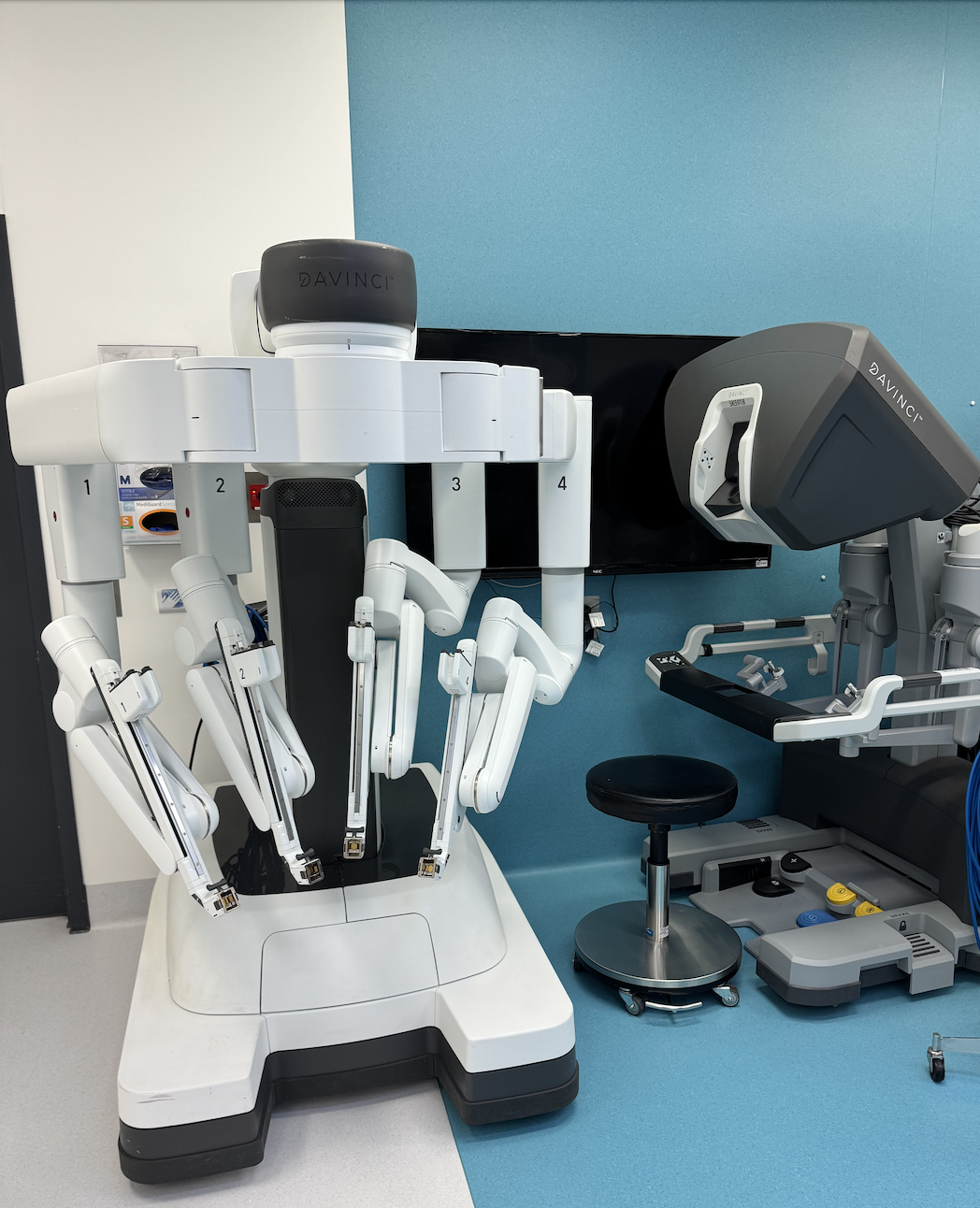
The da Vinci Surgical System is a robot-assisted surgical platform that enables a specially trained surgeon to perform minimally-invasive surgery using tiny incisions and advanced instrumentation.
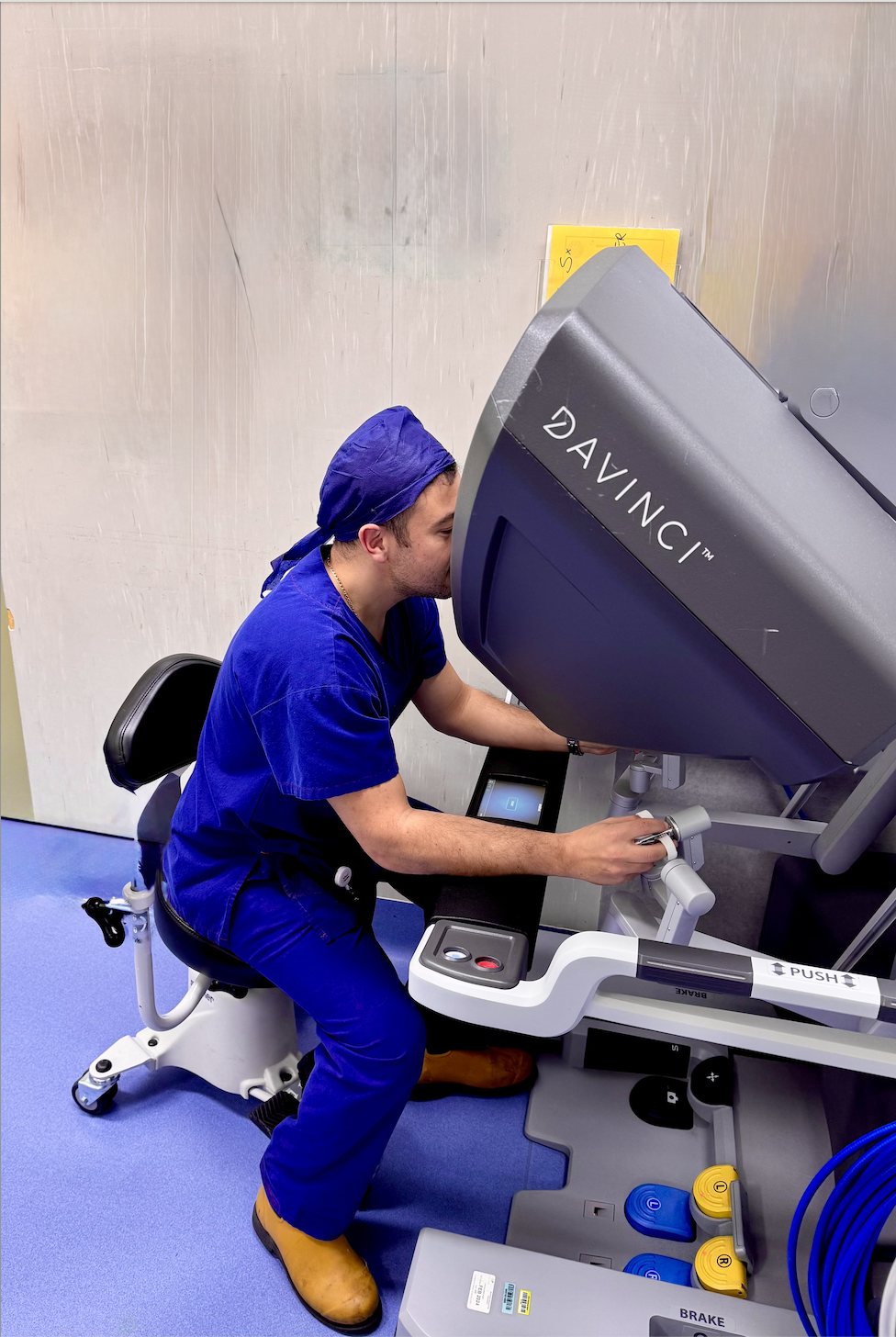
It is important to note the robot does not act autonomously — the surgeon is fully in control at all times, guiding the instruments from a console
How does it work?
The system typically consists of three main parts:
A surgeon’s console, where the surgeon sits and uses hand- and foot-controls while viewing a high-definition 3D view of the operating area.
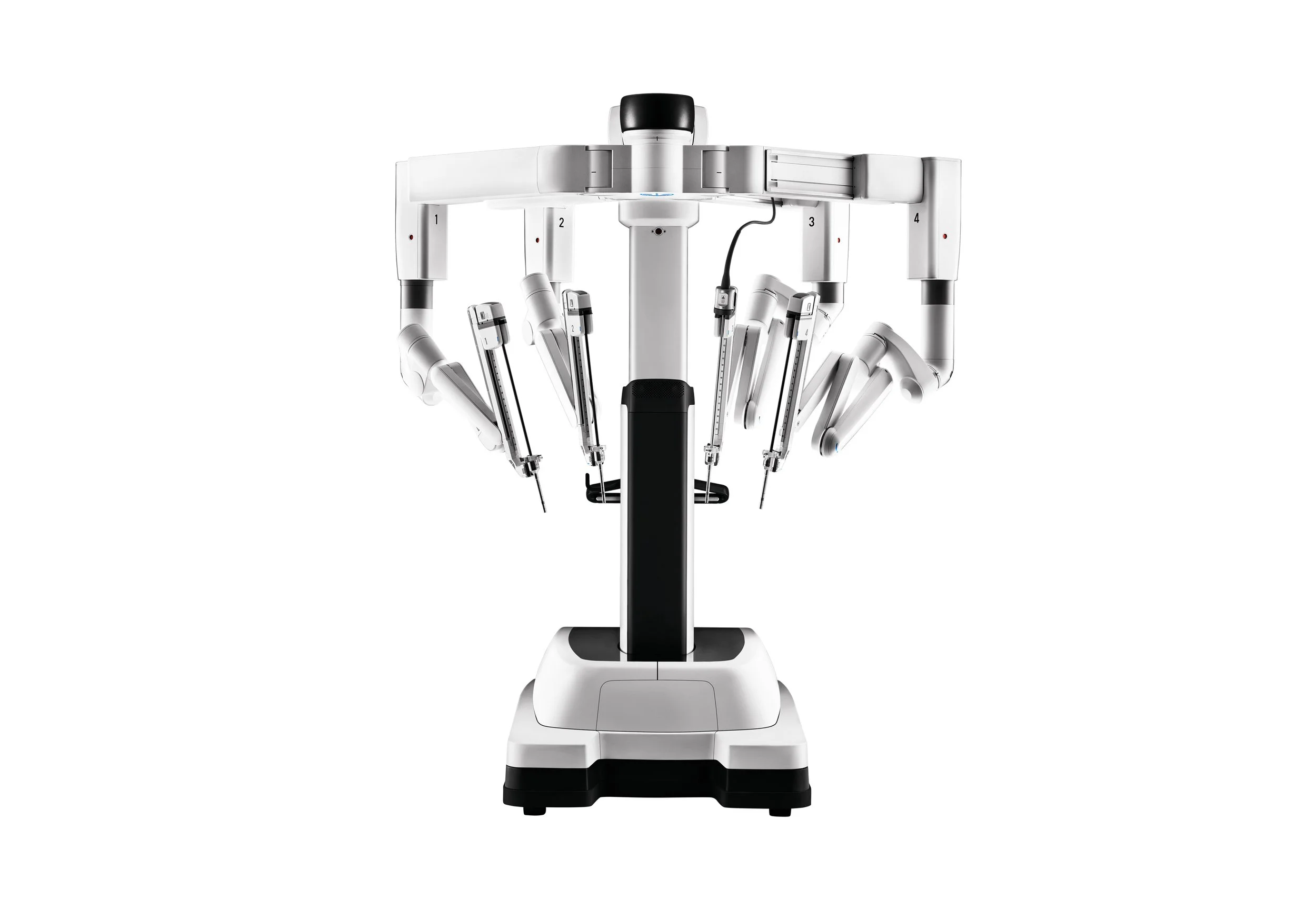
A patient-side cart with multiple robotic arms (for example 3-4 arms) that hold surgical instruments and a camera, and are positioned next to the patient.
A vision tower / computer system that integrates the imaging, instrument controls and assists in link-up. The surgeon makes small incisions (often 1-2 cm) and inserts slender instruments and the camera. The robotic arms translate the surgeon’s movements into precise movements of instruments inside the body.
Benefits of the Da Vinci Robot
Enhanced vision and precision: The system provides a magnified, three-dimensional, high-definition view of the surgical site — allowing Dr.Farag to perform complex and delicate tasks with superior accuracy. This is particularly valuable in confined anatomical regions or cancer surgery, where precision is critical.
Minimally invasive: Smaller incisions are required for robotic surgery compared to traditional surgery. The robotic instruments also have “wristed” tips that allow a greater range of motion, enabling finer dissection, suturing and reconstruction in tight spaces. This translates to less pain and faster recovery for patients.
Improved patient outcomes: Robotic surgery has been associated with lower complication rates, reduced trauma and blood loss and overall shorter hospital stays. This often means greater patient satisfaction and improved outcomes.